Blog

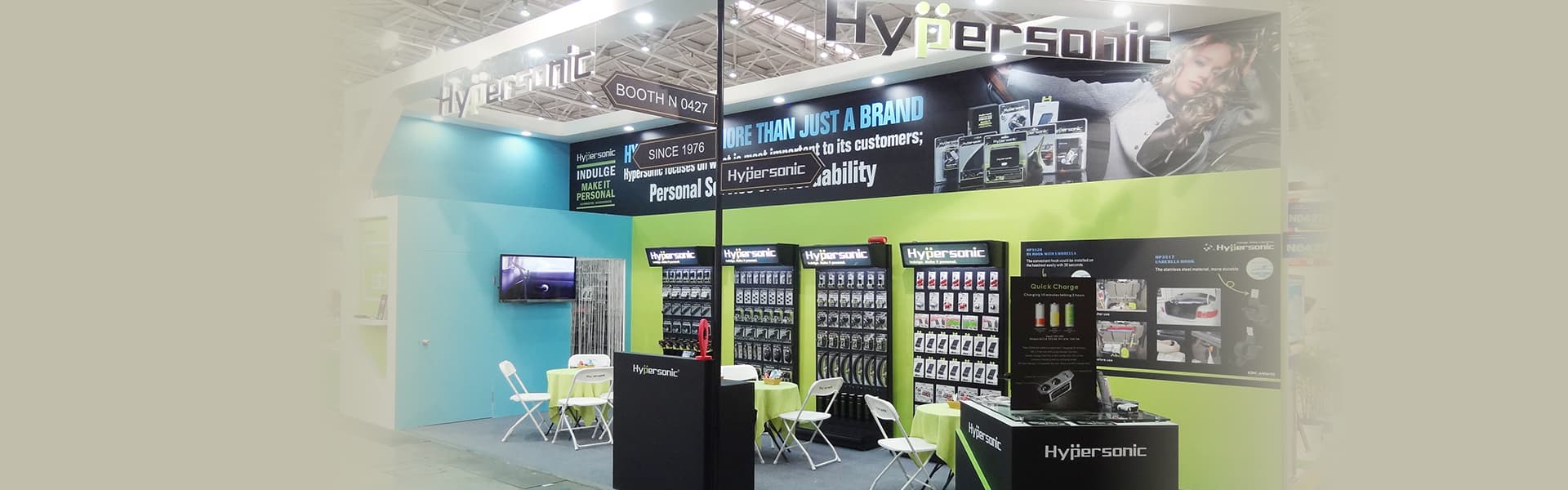
In the world of modern driving, where tight parking spaces and crowded urban environments are the norm, protecting your vehicle from accidental door dings and edge damage has become more important than ever. Hypersonic, a trusted name in smart automotive accessories, has built its reputation by offering innovative, user-friendly solutions designed to enhance vehicle functionality, comfort, and protection. With decades of experience and a global presence, Hypersonic is recognized for its attention to detail, commitment to quality, and customer-centric design.
Among its wide range of products, the Hypersonic Car Edge Guard stands out as a sleek, practical accessory that provides essential protection for vehicle door edges—minimizing scratches, chips, and impact damage from neighboring cars or walls. Whether you're navigating a busy parking lot or safeguarding a newly purchased vehicle, this small yet mighty solution offers peace of mind.
This article offers a comprehensive behind-the-scenes look at how the Hypersonic Car Edge Guard is made—from the thoughtful selection of materials to the precision production process. We’ll also explore how retail and e-commerce best practices are embedded into every stage of development, making it a standout product in both physical stores and online marketplaces.
The market for car door edge guards is experiencing sustained growth, driven by urbanization and a rising emphasis on protecting vehicle exteriors. Globally, the broader automotive accessories market was valued around US $548 billion in 2024, with projections to exceed US $906 billion by 2034, signaling robust demand for protection and customization items. Specifically, the automotive door guard segment was estimated at US $1.25 billion in 2024, with forecasts doubling to approximately US $2.5 billion by 2033, growing at an 8.5 % CAGR. Other projections place market size near US $2.07 billion in 2024, heading toward US $3.52 billion by 2034 at a 5.5 % CAGR
Urban drivers, owners of premium vehicles, and families are key consumers. Tight parking, crowded city streets, and the desire to preserve resale value make edge guards an appealing investment. Commercial fleets also increasingly integrate them to reduce maintenance costs.
Automotive retailers, e‑commerce platforms, and fleet operators all offer opportunities. Online marketplaces like Amazon and specialized auto‑accessory sellers are expanding rapidly, benefitting from growing customer preference for DIY protective solutions
In a saturated accessories market, edge guards that combine smart design, strong materials, and trusted branding stand apart. Lightweight polymers, shock‑absorbing finishes, and custom colors enhance appeal. Brand reputation and visible quality reinforce buyer confidence. Consultant insight suggests that clear visuals, polished listings, and storytelling around quality and performance help products outperform undifferentiated alternatives—whether on retail shelves or online storefronts.
At the heart of every Hypersonic Car Edge Guard lies a careful balance between protection, performance, and aesthetics. Selecting the right materials is critical—not only for ensuring long-term durability but also for meeting user expectations for a sleek, vehicle-compatible design. Hypersonic’s product development team works closely with materials engineers and retail consultants to ensure that each edge guard performs reliably under real-world conditions while visually complementing a wide range of car models.
Car edge guards must endure the extremes of outdoor exposure—scorching sun, freezing winters, and heavy rainfall. Hypersonic opts for thermoplastic elastomers (TPE) and weather-treated PVC compounds, known for their flexibility and resilience in both hot and cold climates. These materials resist cracking, deformation, and brittleness over time, ensuring consistent protection even after years of use.
One common issue with subpar edge guards is yellowing or fading caused by ultraviolet radiation. Hypersonic’s material selection includes UV stabilizers and anti-aging additives, which maintain the original color and finish of the guard—especially important for premium vehicle owners who care about aesthetics. UV resistance also prevents the material from becoming brittle or chalky, a common failure point for low-cost products.
The primary function of an edge guard is to absorb minor impacts that occur when a car door contacts a wall or another vehicle. Hypersonic incorporates materials with multi-layer flexibility, balancing firmness with enough give to absorb force without transferring it to the door panel. The material formulation reduces the risk of paint damage or micro-dents during everyday parking scenarios.
Hypersonic carefully evaluates how its edge guards interact with various automotive paint finishes and door structures. The selected adhesives or friction-fit designs are non-reactive and paint-safe, ensuring they can be installed without harming OEM surfaces. The material also conforms to the slight curvature and thickness of different car door profiles, ensuring a snug, seamless fit.
By combining visual refinement with rugged performance, Hypersonic’s material strategy ensures that each edge guard not only protects but also enhances the vehicle’s profile—making it both functionally reliable and retail-ready.
At Hypersonic, product design is far more than aesthetics—it’s about delivering a user experience that combines functionality, safety, and visual harmony with the vehicle. The Car Edge Guard exemplifies this philosophy, embodying a user-centric approach that meets the demands of both everyday drivers and retail buyers.
The Hypersonic Car Edge Guard is engineered with a slim, low-profile silhouette that complements the contours of modern vehicles without appearing bulky or intrusive. Its universal fit ensures compatibility with a wide variety of car models—from compact sedans to SUVs—eliminating the guesswork for both consumers and retailers.
To blend seamlessly with factory aesthetics, the product is available in multiple color options, including matte black, carbon-style finish, and transparent variants. Installation is intuitive, requiring no tools—simply peel and stick, or clip-on depending on the model. This ease of use appeals to DIY consumers and minimizes installation-related returns.
Every curve and edge of the product is thoughtfully designed with safety in mind. The edge guard features rounded corners and soft material finishes, making it child-safe and reducing the risk of injury or abrasion during everyday use. The adhesives used are non-damaging, allowing removal without leaving residue or harming the vehicle’s paint—especially important for leased or high-value cars.
Subtle branding is integrated into the product through laser-etched or embossed logos, enhancing brand visibility without compromising the car’s appearance. Light textures and clean lines contribute to a premium look and feel, helping position the product as a trusted solution rather than a generic aftermarket add-on.
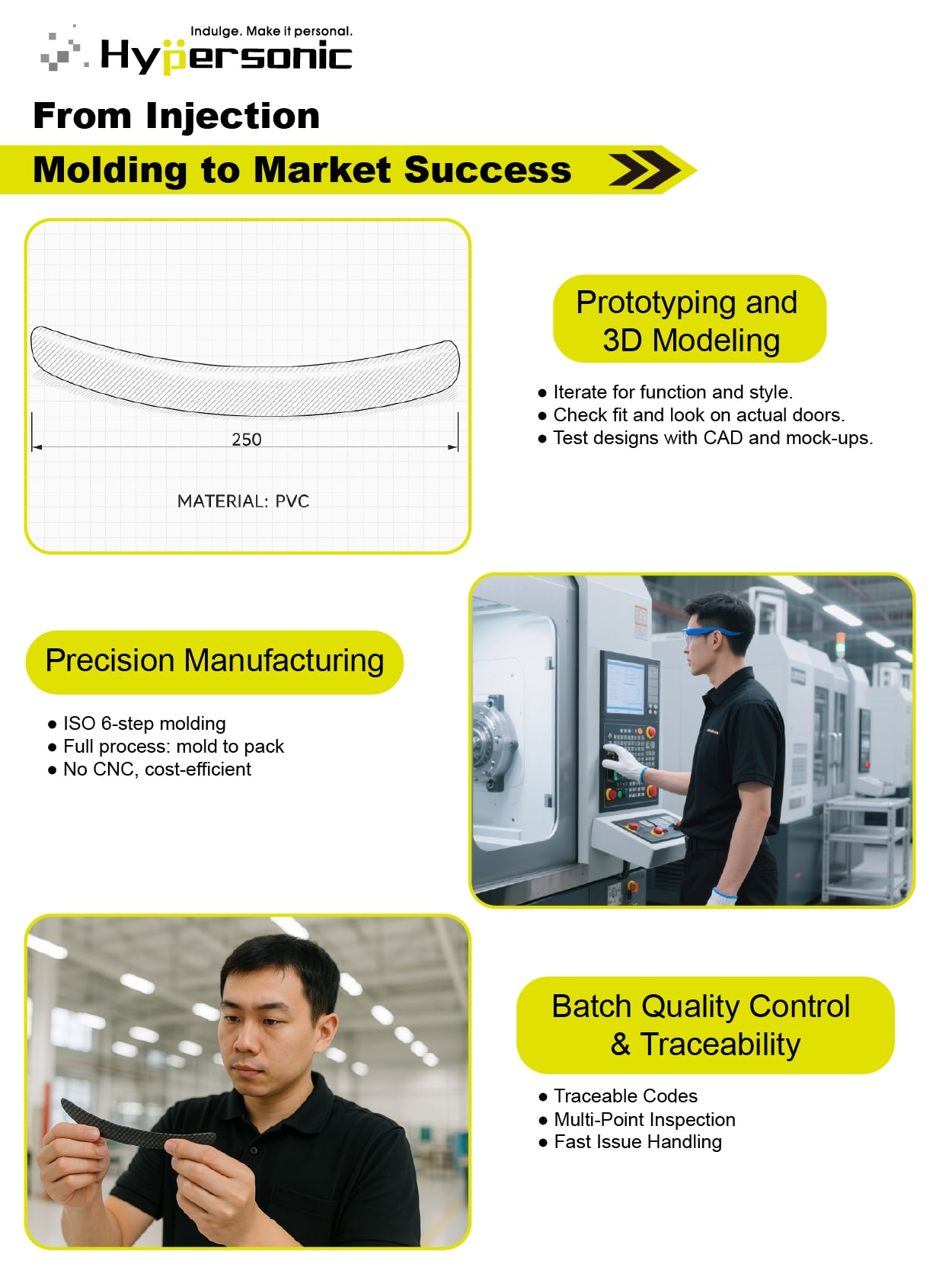
Before final production, Hypersonic uses 3D CAD software and rapid prototyping to test design iterations. These mock-ups are evaluated for fit, flexibility, and aesthetic integration on actual vehicle doors. This iterative process helps ensure the final product is both visually refined and functionally sound.
In e-commerce, high-quality product visuals and clear explanations of function are critical. Hypersonic invests in lifestyle photography and 3D renders that show the product in real-world usage. Meanwhile, the retail packaging is optimized for visibility and unboxing satisfaction—featuring transparent windows, step-by-step guides, and minimal clutter, catering to both in-store shoppers and online buyers who value presentation.
Creating the Hypersonic Car Door Protector is a carefully coordinated process, driven by precision, consistency, and scale. As a plastic injection-molded product, it goes through a six-step manufacturing workflow, designed to meet the rigorous demands of both automotive consumers and global retail partners. The process is fully aligned with ISO-certified quality standards, combining automated systems with skilled manual inspection to deliver reliable performance in every unit.
Production begins with custom steel molds, developed by specialized mold suppliers based on Hypersonic’s product design files. These molds are built to endure high-volume injection molding cycles and are installed directly into the molding machines. Prior to each run, the molds are cleaned, heated, and tested to ensure proper alignment and temperature control.
Next, automotive-grade plastic pellets—such as impact-resistant PVC or TPE—are melted and injected into the mold under high pressure. The molten plastic fills the cavity, taking on the precise dimensions, textures, and contours of the product. Once cooled, the mold opens to release the newly formed door protector.
After demolding, the parts go through automated trimming and manual touch-ups to remove any excess flash material. Edges are smoothed and quality-checked to ensure comfort, visual appeal, and user safety. This step is critical to achieving the clean lines and snug fit expected of a premium accessory.
Every batch is subjected to strict QC procedures, including visual inspection, adhesion testing, and dimensional verification. Hypersonic’s trained staff and automated scanners check for surface defects, warping, and color inconsistencies—ensuring that only flawless pieces proceed to the next stage.
Depending on the model, the product is then pad-printed or embossed with the Hypersonic logo. Finishing options—like matte surfaces or carbon-style textures—are added either in-mold or during light post-processing.
Finally, each protector is packaged in retail- and e-commerce-friendly boxes, complete with install guides and barcodes. Items are then sorted and stored in a climate-controlled warehouse, ready for global distribution.
Production quality directly impacts return rates, reviews, and customer loyalty. A poorly finished item can result in negative feedback or damage to brand reputation. By maintaining consistent, ISO-certified manufacturing standards, Hypersonic ensures that its edge protectors not only meet expectations—they exceed them, making them a trusted choice across both retail shelves and online platforms.
To maintain its strong reputation across both global retail and e-commerce platforms, Hypersonic implements a rigorous, multi-layered quality control system for its Car Door Protector. Each unit undergoes extensive testing to ensure safety, durability, and consumer satisfaction—hallmarks of the brand’s ISO-certified manufacturing approach.
All door protectors are tested for adhesive strength, ensuring they remain firmly in place during high-speed travel, extreme temperature changes, and regular door use. The material’s flex durability is evaluated through repeated bending and pressure cycles to confirm it can absorb impacts without cracking or deforming. Additional weather resistance tests simulate UV exposure, rain, humidity, and extreme heat or cold to validate long-term reliability in real-world environments.
Every production batch is assigned a unique traceability code, linking each product to its exact manufacturing date, material lot, and inspection record. This system supports quick issue resolution and accountability throughout the supply chain. Trained QC personnel perform visual inspections and random pull tests at multiple points—from demolding to final packaging—ensuring only flawless products reach customers.
Hypersonic’s facilities and products conform to several international standards, including:
These certifications give wholesale buyers and online consumers added confidence in the safety, consistency, and sustainability of the product.
In addition to lab tests, Hypersonic performs field testing on actual vehicles, exposing edge guards to parking lot scenarios, tight garage spaces, and varying climates. This hands-on approach helps fine-tune product fitment, longevity, and user experience.
In e-commerce, durability equals lower return rates. Negative reviews often stem from poor adhesion, discoloration, or early breakage. By combining batch traceability, real-world validation, and robust testing, Hypersonic not only meets expectations—it proactively minimizes complaints, builds brand trust, and improves online ratings, setting a high standard in automotive accessory quality control.
A great product doesn’t sell itself—it needs to be presented in a way that reflects the brand’s values, builds trust at a glance, and communicates its benefits clearly. Hypersonic understands that first impressions matter, especially in competitive retail and online environments. That’s why the Car Door Protector is packaged and branded with the same precision as it is manufactured.
From the product finish to the packaging design and instruction manual layout, Hypersonic maintains strong brand consistency. Each unit carries a discreet but recognizable Hypersonic logo—etched, printed, or molded—paired with sleek visual identity elements like clean fonts, color-coded labels, and informative icons. The tone and visuals used in the instructions mirror the brand’s core promise: smart, safe, and stylish car accessories.
Hypersonic’s packaging serves dual purposes:
In both online and offline channels, clear visuals and concise messaging drive conversion. Hypersonic includes:
This enhances buyer confidence and reduces post-sale questions or returns. Additionally, language localization ensures the packaging and manuals are accessible across international markets, making the product shelf-ready from Tokyo to Toronto.
Effective packaging is more than a wrapper—it’s a silent salesperson. For retail buyers, this means fewer customer complaints and higher turnover. For online sellers, it means better reviews, fewer returns, and stronger brand loyalty.
Hypersonic’s go-to-market approach for the Car Door Protector leverages a hybrid distribution model, combining B2B wholesale partnerships, e-commerce platforms, and brick-and-mortar retail channels. This ensures wide product availability across different regions and buyer types—from individual drivers to fleet operators and car accessory dealers.
To stand out in a crowded space, Hypersonic offers:
For e-commerce platforms like Amazon, A+ Content and comparison charts are essential. They help clearly communicate features (e.g., paint-safe adhesive, weather resistance) and differentiate the product from generic alternatives. Additionally, Hypersonic actively gathers customer feedback through post-sale surveys and product reviews, feeding insights back into future product development and packaging upgrades.
By maintaining a dynamic, data-driven go-to-market strategy, Hypersonic ensures its Car Door Protector is not only widely available—but also positioned for long-term success in diverse and evolving retail ecosystems.
As sustainability becomes a growing priority among global consumers, Hypersonic continues to align its operations and product strategies with eco-conscious values. The Car Door Protector reflects this commitment through the use of durable, long-lasting plastics that reduce the need for frequent replacements. Its compact, minimal packaging is designed to reduce material waste, using recyclable paper and reduced plastic where possible—meeting the expectations of modern, environmentally aware buyers.
From a product lifecycle perspective, the edge guard is built for multi-year use, resisting wear and tear from daily exposure. Once it reaches end-of-life, its thermoplastic materials can be sorted and recycled, depending on local facilities, contributing to a more circular use of resources.
Looking ahead, Hypersonic is exploring innovations such as smart edge guards—potentially integrating reflective strips for nighttime visibility, or even micro-sensors that detect impacts or send alerts. These advancements could appeal to tech-forward drivers and fleet managers alike, blending protection with functionality.
By investing in both sustainable practices and future-oriented features, Hypersonic stays at the forefront of the aftermarket accessory industry—offering products that not only perform well, but also reflect the values of the next-generation consumer.
This site uses cookies to improve your browsing experience. we’ll assume you’re OK to continue. If you want to read more about this, please click PRIVACY thank you.