Blog


Your phone mount drops during a sharp turn. However, you still reach for it. Then your suction cup holder leaves a faint ring on the glass. Yet the vent clip starts to wobble after a few hot days. Meanwhile, a cheap headrest hook can crack when a grocery bag swings. These moments feel minor, but they create real distraction.
That’s why car accessory mounting types matter more than most people expect. Although many gadgets look “universal,” the mount decides the grip, the vibration control, and the cleanup. Some systems fail from heat and dust. Others fail from leverage and weak contact points. But once you know what to look for, you can avoid most of it.
In this guide, we’ll explain suction, clip, hook, and bolt-on mounts in plain terms. We’ll show how each design holds, and where it usually fails. Then we’ll help you choose the right option for your interior and driving style. For example, a screw-lock base can feel rock-solid, but it isn’t always the fastest to move. Instead of guessing, you’ll leave with clear rules for stability, safety, and long-term use.
Car accessory mounting types describe how a gadget attaches to your vehicle, and how it stays stable under vibration, bumps, and braking. In other words, a mount isn’t just a “holder.” It’s a small system that manages grip, load, and movement. Some designs spread force across a wide surface. Others concentrate force at a clip point or hook. That difference affects how long the accessory lasts, and how often it shifts out of place.
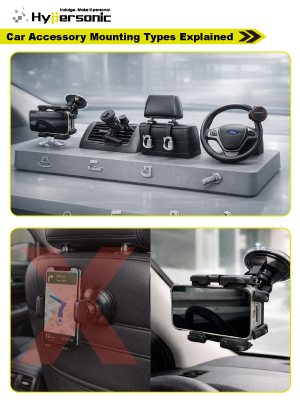
In this guide, we’ll focus on four common car accessory mounting types you’ll see on everyday gadgets. First, suction mounts (like a suction cup holder) often attach to glass or smooth dashboards for quick install and removal. Second, clip mounts grab onto vents, trim edges, or slots, which can be convenient but may loosen over time. Third, hook mounts—including the popular headrest hook—hang items like bags, organizers, or small trash bins behind the seat. Fourth, bolt-on mounts, often built around a screw-lock base, provide a tighter mechanical clamp and are usually the most stable for long-term setups.
Featured snippet:
Mounting type = attachment method + load path + removal style
Attachment method is how it grips. Load path is how force travels through it. Removal style is how fast you can detach it.
Summary: Mounting type matters because it decides stability on real roads. However, the “easiest” mount can fail first in heat or vibration. Yet a stronger system may take longer to install. But when you match the mount to the load, you reduce distraction and damage. Instead of guessing, you get a setup that works every day.
Before you buy, compare mounts by grip style, where the force goes, and how often you plan to remove it. A suction cup holder may feel strong at first, however it depends heavily on surface and temperature. A clip mount is fast, yet it can loosen with vibration. A headrest hook is simple, but it is only as strong as its material and load control. A screw-lock base is usually the most stable, but it is slower to install.
|
Mount type |
Best for |
Strength |
Surface compatibility |
Removal |
Common failure mode |
Pro tip |
|
Suction (suction cup holder) |
Phones, light gadgets, temporary setups |
Medium (can be high on ideal glass) |
Best on smooth glass; weak on textured dash |
Very easy |
Seal breaks from heat, dust, texture |
Clean + dry the surface, then warm the cup before locking |
|
Clip |
Vent/trim mounts, quick swaps, shared cars |
Low–Medium |
Depends on clip design and thickness |
Easy |
Wobble from vibration or poor fit |
Choose padded jaws and match clip width to vent/trim thickness |
|
Hook (headrest hook) |
Bags, organizers, small trash bag |
Medium (for light loads) |
Needs compatible headrest posts/spacing |
Easy |
Snapping or swinging loads |
Keep loads light, and use straps to reduce swing on turns |
|
Bolt-On (screw-lock base) |
Heavier devices, long-term installs, rough roads |
High |
Works where a clamp/screw can bite securely |
Moderate–Hard |
Over-tightening or surface marking |
Tighten gradually, use protective pads, and re-check after 1 week |
Summary: This table helps you choose faster because it compares grip, surfaces, and failure points side by side. However, the “best” mount changes with your car interior and your load. Yet if stability is your top goal, bolt-on with a screw-lock base usually wins. But if quick removal matters most, suction and clip mounts are often easier to live with.
A suction cup holder works by creating a low-pressure pocket between the cup and the surface. When you press and lock it, air gets pushed out. Then outside air pressure pushes the cup tight against the surface. However, suction is not “sticky” by itself. It relies on a good seal around the rim. If the rim can’t seal, the cup will slowly leak air back in. Then it will release, often at the worst time.
The mount also depends on load direction. A phone that sits far from the cup creates leverage. Yet leverage increases pull force on the rim. So even a strong suction cup can fail if the arm is long, or if the device is heavy.
Suction works best on smooth, non-porous, rigid surfaces. Windshields and side windows are usually ideal. Some smooth dashboards can work too, but only if the finish is truly flat and sealed. However, many dashboards are textured or slightly porous. That texture breaks the seal. Yet it may “feel” attached for a day, then fail in heat.
Worst surfaces include heavily textured plastics, soft-touch rubber, dusty leather grain, and curved areas where the rim can’t sit evenly. Instead of fighting the material, choose a different mounting type when the surface can’t support a clean seal.
Heat is the silent killer. In summer, the cabin temperature rises fast. Then the suction cup softens and the seal can deform. Yet the adhesive gel layer, if present, can also collect dust. Dust acts like tiny spacers. So the seal leaks faster. Vibration makes it worse, because small oscillations gradually “walk” the rim loose. However, the failure isn’t always sudden. Many suction mounts fail slowly, then drop without warning.
Start with cleaning, but clean the right way. First wipe the surface with a dry microfiber to remove grit. Then use a mild cleaner (or isopropyl alcohol on glass) and let it fully dry. However, don’t mount over conditioner residue or oily protectant. Next, warm the suction cup slightly with your hands. This makes the rim more flexible. Then press firmly and engage the lever-lock if your design has one. Yet don’t stop there—apply steady pressure for a few seconds after locking to help the seal settle.
Placement matters too. Put the mount where the arm stays short. Also avoid extreme heat zones near defroster vents and direct sunlight when possible. But don’t place it where it blocks visibility or forces you to reach.
Suction mounts shine for temporary setups and frequent removals. They’re great for rental cars, shared family vehicles, and people who switch devices often. They also work well for lightweight gadgets like small phone holders, toll transponder holders, or compact accessories. However, for heavy devices or long arms, a suction mount becomes less predictable. In that case, a screw-lock base or another mechanical option may be safer.
Mini checklist box: Before you blame the mount, check these 6 things…
Summary: A suction cup holder is a smart choice when you need quick install and easy removal on clean glass. However, it becomes risky on textured dashboards or in high heat. Yet you can boost reliability with proper cleaning, warming, and short-arm placement. But if your surface is rough or your device is heavy, switch mounting types instead. Rule of thumb: smooth glass = suction works; textured dash + summer heat = expect failures.
Clip mounts work by pinching onto a part of your car—usually a vent, visor, trim edge, or a thin slot. The two main styles are spring clips and screw-tight clips. A spring clip is fast: squeeze, attach, done. However, speed can come with weaker holding force if the jaws don’t match the thickness. A screw-tight clip adds a knob or dial to increase clamping pressure. Yet it also takes longer to install, and it can mark surfaces if you over-tighten. The best choice depends on whether you value quick swaps or a tighter, more stable grip.
Vent clips are popular because they sit high and feel convenient. However, they come with trade-offs. First, they can stress vent blades, especially if the device is heavy or the roads are rough. Yet even light gadgets can wobble if the vent slats flex. Second, vent mounts can block airflow. That may be fine in mild weather, but it can be annoying in summer. Third, temperature matters. Heat from vents can soften plastics over time, while cold air can make some materials brittle. So a vent clip might work perfectly for months, then suddenly feel loose.
Trim and slot clips aim to attach without taking up windshield or dash space. They often grab a panel seam, a trim edge, or a thin slot where the clip can anchor. This looks clean and keeps visibility clear. However, trim clips require better fitment than most buyers expect. The interior gap must be consistent, and the clip must match the thickness. Yet when it fits, it can be a very tidy solution for small accessories like cable guides, light organizers, or compact holders.
Clip mounts win when you need flexibility. They’re great for rental cars, ride-shares, delivery drivers switching vehicles, or families sharing one accessory. You can move them in seconds. However, the same “easy to move” benefit also makes them more likely to shift over time. If you drive on bumpy roads, or if you constantly adjust angles, a clip mount may gradually loosen. In those cases, a screw-lock base might feel more stable, but it won’t be as quick.
Fitment is everything with clips. Measure the thickness of the vent blade or trim edge if you can. Then pick a clip designed for that range. Look for padded jaws or soft contact points to reduce scratches and noise. Yet padding alone isn’t enough—anti-rattle design matters too. A good clip mount uses tight tolerances, textured grip surfaces, or a secondary stabilizer. Also keep the arm short, because long arms create leverage. Instead of chasing the strongest clamp, prioritize a mount that fits your interior correctly.
Summary: Clip mounts are best when you want fast installs and easy transfers between cars. However, spring clips fit best on consistent, sturdy edges, while screw-tight clips suit thicker parts that can handle clamping. Yet vent clips carry extra risks like blade stress and airflow blocking. But trim and slot clips can look cleaner if the fit is correct. Easy to move is convenient, but it can also mean easier to loosen over time.
A headrest hook is designed for one job: hanging light items where they won’t roll around. It’s ideal for grocery bags, handbags, jackets, umbrellas, and small organizers. However, it’s not a “mount” for devices that need angle adjustment like a phone or camera. Instead, it’s a simple convenience tool that keeps the cabin tidy. Many drivers like it because it installs in seconds and doesn’t require tools. Yet the simplicity can hide real limits if you overload it.
Hook mounts handle weight differently than suction or clip systems. A hanging bag becomes a pendulum. Then turns and hard braking can multiply the force on the hook. So a bag that feels “not that heavy” when parked can hit the hook much harder while driving. However, the bigger risk is what’s inside the bag. A bottle, a laptop, or canned goods can turn into a swinging weight. Yet this is also a safety issue around passengers. If kids sit in the back, you don’t want heavy items swinging near them. Keep loads light, keep them low, and reduce swing with straps when possible.
Most headrest hooks are plastic, metal, or a mix. Plastic hooks are quiet and interior-friendly. However, cheap plastic can crack under repeated shock loads. Metal hooks are stronger, yet they can rattle and they may scratch headrest posts if they’re not padded. Look for smooth edges and protective sleeves. Also check the hook shape. A deeper curve holds bag handles better, but it can also crowd legroom if it sticks out too far. Balance strength with comfort instead of choosing the bulkiest option.
Placement matters more than people think. Many cars have side curtain airbags along the roofline. So avoid routing straps or hanging items where they could interfere. Also consider rear visibility. A large bag can block your mirror view, especially in smaller cars. However, the best placement is usually behind the front seat, close to the seatback, and below the window line. Yet if your headrest posts are fixed or oddly shaped, not all hooks will fit well. In that case, a different organizer style may be better.
Short answer: Yes, however only if these conditions are met:
Summary: A headrest hook is safest when you treat it as a light-duty organizer, not a heavy-duty mount. However, swinging loads during braking can add stress and increase risk. Yet you can reduce problems by keeping weight low and securing straps to prevent sway. But if you need long-term stability for equipment, hooks aren’t the right tool. Hooks are convenience-first, so use them for tidy storage rather than serious load bearing.
In car gadgets, “bolt-on” usually means the mount uses mechanical force instead of suction or clipping alone. It may not always involve a literal bolt through the car. However, it does mean the mount is designed to lock down with a screw, clamp, or fastener so it resists vibration. Unlike a suction cup holder that depends on a seal, a bolt-on system holds because parts are tightened together. Yet that strength comes with more commitment, because you’ll spend more time installing and positioning it.
A screw-lock base is the common “bolt-on” style for car accessories. You’ll see three main designs:
No matter the design, the goal is the same: create a strong load path so the accessory doesn’t wobble under real driving forces.
Bolt-on mounts are popular because they feel “set and forget.” The main advantage is stability. A screw-lock base can clamp tightly enough that small road vibrations don’t shake your device. That matters for heavier phones, tablets, action cams, radar detectors, and work accessories. It also helps if you use long extension arms. However, the biggest win is consistency. Once you tighten it correctly, your viewing angle stays put. Yet you still need occasional re-checks, because vibration can loosen threads over time.
The trade-off is convenience. Bolt-on setups take longer to install, because you must find a strong anchor point and align everything before tightening. But if you rush, you may create problems. Over-tightening can crack plastic trim, compress soft materials, or leave pressure marks. Yet under-tightening can still lead to creeping movement. Another downside is permanence. A screw-lock base is not as “grab and go” as a clip. So if you frequently switch cars, it may feel like too much work.
A screw-lock base shines in demanding situations. It’s ideal for fleet vehicles, delivery drivers, and people who want a mount that stays stable every day. It’s also a strong choice for off-road or rough-road driving, where constant vibration defeats weaker mounts. For heavier devices and long-term setups, bolt-on provides the most reliable hold. However, if your interior surfaces are delicate or you can’t find a solid clamping point, a different mounting type may be safer.
Decision box
Summary: Bolt-on mounts built around a screw-lock base are usually the most stable option because they rely on mechanical clamping, not a seal or a snap fit. However, that stability comes with slower installation and a more permanent feel. Yet when you need vibration control for heavier devices or rough roads, bolt-on is the clear winner. But it’s the least “casual” choice, so it fits drivers who want a committed, long-term setup.
Start with the load. Weight matters, but leverage matters more. A heavier phone on a long arm pulls harder than you expect. So a suction cup holder that feels strong can still fail if the arm is extended. However, a screw-lock base handles leverage better because it clamps mechanically. Clip mounts sit in the middle, yet they can wobble when the device is top-heavy. A headrest hook is different: it’s for hanging weight, but swinging load can spike force during turns.
Heat changes everything. A hot cabin can soften suction rims and weaken seals. Yet cold air from vents can also make plastics stiff and brittle. Humidity and dust reduce suction reliability, but they can also make clips slip if pads get dirty. Road conditions matter too. Smooth highways are forgiving. However, rough roads and off-road vibration reward bolt-on designs, because looseness grows over time in clip and suction systems.
Your routine is a filter. Daily commuting usually works with suction or clip, but only if you don’t adjust it constantly. Delivery drivers often re-mount gear and need quick swaps, yet they also hit bumps and curbs more often. Off-road drivers need maximum stability, so bolt-on and screw-lock base mounts make more sense. If you mainly want cabin organization, a headrest hook is simple and fast. However, it’s not for heavy gear.
Interior material decides compatibility. Smooth glass is suction’s best friend. Yet textured dashboards, soft-touch coatings, and leather grain can break a suction seal. Vent designs vary a lot, so clip fit can change from car to car. Trim clips need consistent seams, but some modern interiors are too tight or too glossy. Bolt-on clamps need a sturdy edge, however fragile trim should be avoided. Instead, pick the mount that matches your actual surfaces, not the product photo.
Summary: The fastest way to choose is the 3-factor method: load, environment, and interior material. However, ignoring any one of them leads to wobble, falls, or wasted money. Yet when you match weight and leverage to the right mount, your setup stays stable. But when you also consider heat and surfaces, you avoid the most common failure modes. Instead of trial and error, you buy once and mount once.
Which car accessory mounting type is most stable?
Bolt-on mounts are usually the most stable, especially a screw-lock base. However, stability depends on having a solid anchor point and correct tightening. Yet for heavy devices or rough roads, bolt-on is still the safest bet.
Why does my suction cup holder keep falling off?
Most failures come from a weak seal. Dust, oily residue, or a textured dashboard lets air leak in. However, heat can also soften the suction rim and break the seal faster. Clean the surface, fully dry it, warm the cup, and keep the arm short. If it still drops, switch to clip or bolt-on instead.
Are vent clips bad for car vents?
They can be, but not always. A light device with a well-fitted clip is often fine. However, heavy phones or long arms can stress vent blades and cause wobble. Yet airflow blockage and hot/cold air can also reduce comfort and durability.
What is a screw-lock base and when do I need it?
A screw-lock base is a bolt-on style mount that tightens with a screw or knob to clamp securely. It’s best when you need a steady screen, minimal shake, and long-term placement. However, it takes longer to install and may leave marks if over-tightened. Use it for heavier devices, fleet use, or rough-road driving.
Is a headrest hook safe for heavy bags?
Not for truly heavy bags. A headrest hook is meant for light loads like groceries, purses, or umbrellas. However, heavy items swing during braking and turns, which spikes force and increases risk. Yet you can improve safety by keeping loads light and using straps to reduce swing.
Summary: Bolt-on with a screw-lock base is the stability winner, but it’s less “quick swap.” However, suction fails most often from heat, dust, and textured surfaces. Yet vent clips only work well when the fit is correct and the load is light. But headrest hooks are for convenience, not heavy-duty carrying.
Choosing the right mount is less about the gadget and more about how it attaches. However, once you match the mount to your load and surfaces, daily driving gets calmer. A stable setup reduces fiddling, but it also reduces distraction. Start by thinking about weight and leverage. Then consider cabin heat and your interior texture. Yet don’t ignore your routine, because a mount that’s perfect for commuting can feel annoying for shared cars.
Best-practice recap (one per mounting type):
Next step: Pick your mount based on load + surface + climate. However, if you’re still unsure, start with the surface first: glass favors suction, while rough roads favor a screw-lock base.
For more help, explore our internal guides on phone mount placement, dash cam setup, and installation tips, or browse our mounting product categories to compare options by vehicle type.
Summary: The safest buying pattern is simple: choose by car accessory mounting types, then confirm your load, interior surface, and climate. However, suction and clips fail most often when surfaces or heat don’t match. Yet hooks fail when swinging loads are too heavy. But when you apply the load–surface–climate method, you avoid repeat purchases and get stable everyday use.
This site uses cookies to improve your browsing experience. we’ll assume you’re OK to continue. If you want to read more about this, please click PRIVACY thank you.