Blog


In today’s competitive automotive aftermarket, automotive brand building has become a critical strategy for manufacturers seeking long-term global success. While thousands of automotive accessories are produced every year, only a small number of manufacturers successfully evolve into a global car accessory brand recognized for trust and reliability. Buyers, distributors, and fleet operators are no longer choosing products based on price alone. Instead, they prioritize safety, consistent quality, and dependable supply partners.
Many automotive accessory companies begin their journey as OEM factories, producing components quietly behind the scenes for larger brands. However, as global markets become more transparent and competitive, some manufacturers are choosing a different path. They are investing in branding, innovation, and international credibility to transform themselves from anonymous suppliers into recognizable names.
This transformation is particularly visible in the Taiwan brand story. Taiwan has long been known for precision manufacturing and strong export capabilities. Yet today, many Taiwanese automotive accessory makers are moving beyond contract manufacturing. They are building their own global brands, combining engineering expertise with a strong commitment to product quality and long-term reliability.
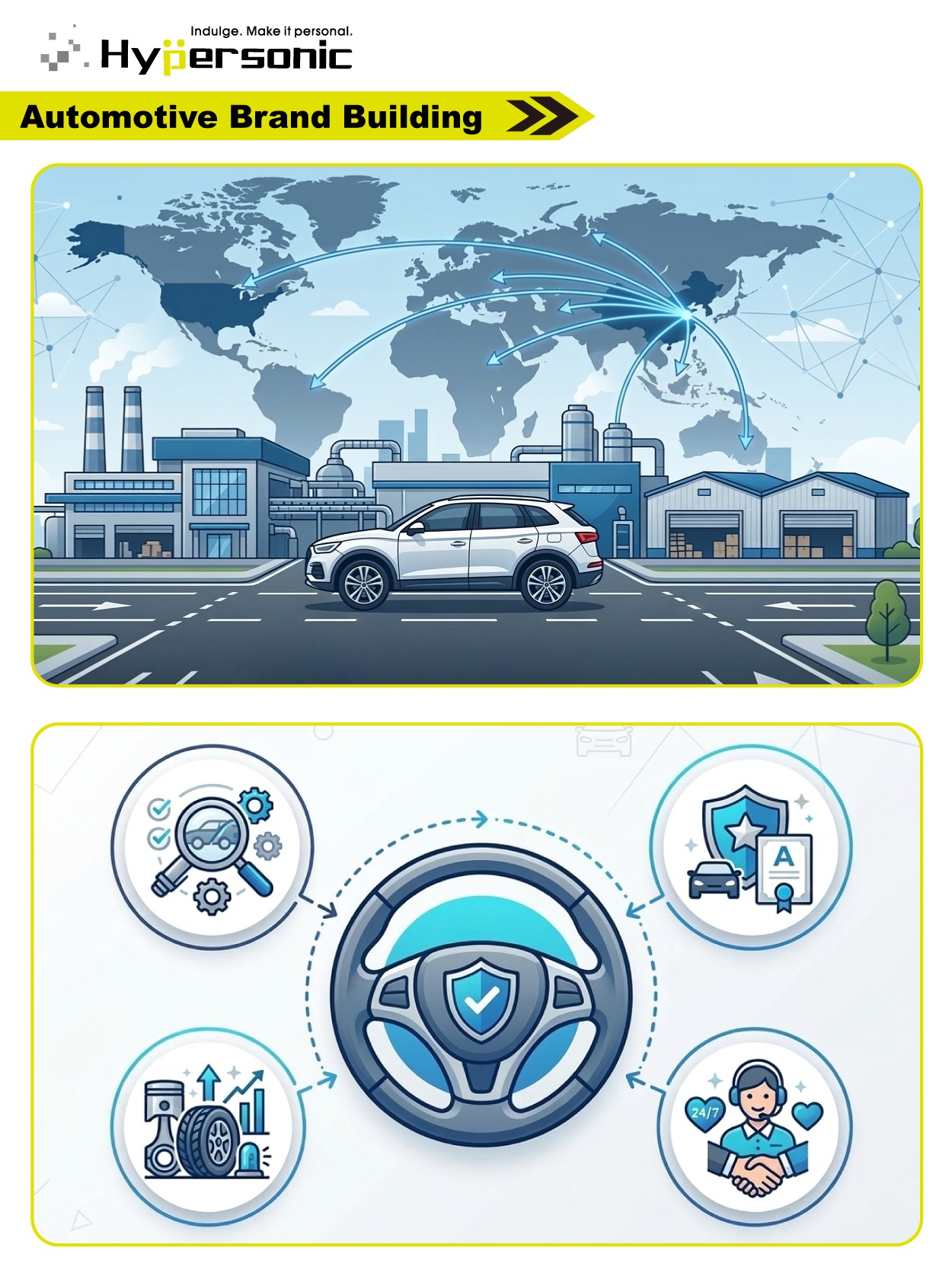
Together, these elements form the foundation of modern automotive brand building—where manufacturing excellence evolves into global brand trust.
The global automotive aftermarket has become one of the most competitive sectors in the transportation industry. According to industry reports from organizations such as the Automotive Aftermarket Suppliers Association, the global automotive aftermarket is expected to exceed $500 billion in value within the coming years, driven by longer vehicle lifespans, growing vehicle ownership, and increasing demand for replacement parts and accessories. However, as the market expands, competition among manufacturers also intensifies. As a result, automotive brand building is no longer optional—it has become essential for long-term growth.
One major reason branding matters is the structure of the B2B automotive supply chain. Buyers such as distributors, fleet operators, and automotive retailers must choose suppliers they can rely on for consistent quality and dependable delivery. While OEM factories often operate behind the scenes producing components for other brands, a global car accessory brand builds direct recognition and credibility in the market. This distinction changes how buyers perceive the company: a factory focuses on production capacity, whereas a brand represents reliability, engineering expertise, and long-term accountability.
The modern aftermarket also presents several challenges. Low-cost competitors continue to enter the market, frequently competing primarily on price. Unfortunately, price-driven competition can lead to quality inconsistency, product failures, and supply disruptions. For distributors managing international customers, these risks create operational uncertainty and potential damage to their own reputation. Consequently, many professional buyers prioritize partners who demonstrate proven trust and reliability rather than simply offering the lowest price.
Strong automotive brand building provides several clear advantages in this environment. First, recognized brands find it easier to form partnerships with distributors because their reputation reduces perceived risk. Second, branded manufacturers can maintain higher margins since customers associate the brand with quality and durability. Finally, strong brands build long-term customer loyalty, which stabilizes demand even in highly competitive markets.
In a rapidly expanding but increasingly competitive aftermarket industry, branding has become a strategic necessity rather than a marketing luxury. Automotive buyers and distributors seek reliable partners who can guarantee consistent quality, safety, and dependable supply. By investing in automotive brand building, manufacturers move beyond the limitations of anonymous OEM production. Instead, they position themselves as trusted global partners capable of delivering value, stability, and long-term reliability to the international automotive supply chain.
The Taiwan brand story in the automotive industry is closely tied to decades of manufacturing excellence and global supply chain integration. For many years, Taiwan has earned a strong reputation for precision manufacturing, particularly in automotive components, electronics, and industrial hardware. Companies across the island have developed deep expertise in producing high-quality parts that meet the strict requirements of international markets. As a result, Taiwan has become a key supplier within the global automotive ecosystem, supporting distributors, aftermarket retailers, and OEM partners around the world.
One of Taiwan’s greatest strengths lies in its flexible OEM and ODM production capabilities. Taiwanese manufacturers are well known for their ability to adapt quickly to customer requirements, customize product designs, and manage small-to-medium production volumes efficiently. This flexibility has made Taiwan an attractive partner for global automotive brands seeking reliable suppliers capable of maintaining consistent quality while responding rapidly to market changes.
The evolution of the Taiwan automotive industry can generally be understood in three stages.
Stage 1 – Contract Manufacturing
In the early years, many companies focused primarily on contract manufacturing. They produced automotive accessories and components for international brands but remained largely invisible to end customers. Their role was centered on production efficiency and technical capability.
Stage 2 – OEM Partnerships
As their expertise grew, Taiwanese manufacturers began forming deeper partnerships with global automotive companies. These OEM relationships allowed suppliers to participate in product development, engineering improvements, and quality assurance processes. Through these collaborations, manufacturers accumulated valuable experience in international standards and supply chain management.
Stage 3 – Brand Creation
Today, a growing number of companies are moving toward building their own brands. Instead of remaining anonymous suppliers, they are developing branded product lines that highlight engineering capability, strict quality control, and decades of export experience. By investing in branding and marketing, these companies are transforming technical credibility into recognizable global identities.
Taiwan also benefits from a unique industrial structure built around mid-size specialized manufacturers. Unlike massive multinational corporations, these firms often focus on specific product categories and refine their expertise over many years. This specialization allows them to innovate quickly, improve designs continuously, and respond rapidly to evolving automotive trends. The result is a dynamic ecosystem where rapid innovation cycles and practical engineering solutions thrive.
Through these advantages, Taiwanese automotive accessory manufacturers have become increasingly visible within the global automotive supply chain. Their products are now distributed across North America, Europe, and Asia, serving professional buyers who value consistent performance and dependable manufacturing partners.
The Taiwan brand story demonstrates how manufacturing expertise can evolve into global brand recognition. Many Taiwanese companies began as contract manufacturers, quietly producing automotive components for international brands. However, through years of OEM collaboration, engineering refinement, and export experience, they have built the technical credibility necessary to establish their own brands. By combining precision manufacturing, flexible production, and specialized innovation, Taiwan’s automotive manufacturers are transitioning from behind-the-scenes suppliers into trusted brand-driven companies serving the global automotive market.
In the automotive aftermarket, trust and reliability are not simply marketing claims—they are essential requirements for long-term success. Automotive accessories often interact directly with critical vehicle systems or driver controls, which means product quality can affect both safety and driving performance. Because of this, distributors, retailers, and fleet managers must carefully evaluate suppliers before adding products to their catalog. If a component fails or performs inconsistently, the consequences can include vehicle damage, driver risk, and reputational harm for the seller. Therefore, professional buyers consistently prioritize suppliers known for trust and reliability.
One of the primary reasons trust is so important is the safety implications of automotive accessories. Even smaller components can influence how drivers control a vehicle or interact with essential systems. Accessories must also maintain compatibility with various vehicle models, ensuring that installation does not interfere with steering, electronics, or other mechanical functions. Additionally, global markets impose strict regulatory standards designed to protect drivers and maintain road safety. Manufacturers must therefore design products that meet these requirements while maintaining consistent performance across different conditions.
Several key elements help manufacturers establish this level of trust.
Quality control forms the foundation of reliable automotive accessories. Reputable manufacturers invest heavily in material selection, durability testing, and production monitoring to ensure every product meets strict standards. High-grade materials improve strength and longevity, while durability testing verifies that components can withstand long-term use. Consistent inspection during manufacturing further ensures that each product performs as expected once installed in a vehicle.
In international markets, safety compliance is essential. Automotive accessories must often align with regulatory frameworks such as FMVSS (Federal Motor Vehicle Safety Standards) in the United States and ECE regulations used across Europe. These standards establish technical requirements related to performance, safety, and durability. Manufacturers that design products with these regulations in mind demonstrate a strong commitment to safety and professional engineering. Compliance with recognized standards helps ensure accessories maintain reliable operation in real-world driving conditions.
Beyond meeting standards once, trusted manufacturers must maintain consistent product quality across every production batch. Distributors rely on predictable performance to avoid product returns, warranty claims, and customer complaints. Stable manufacturing processes and standardized testing help ensure that products delivered months or years apart still meet the same performance expectations.
Strong customer support also contributes to trust. Professional buyers value suppliers who provide clear technical documentation, responsive communication, and reliable after-sales service. When issues arise, a supportive manufacturer can quickly resolve problems, protecting both the distributor’s reputation and the end user’s experience.
In the automotive accessory industry, trust and reliability are built through a combination of engineering discipline and operational consistency. Manufacturers must implement strict quality control processes, design products that comply with international safety standards, maintain consistent performance across production runs, and support customers with professional service. By meeting these expectations, suppliers demonstrate that their products are safe, dependable, and worthy of long-term partnerships—qualities that professional buyers prioritize when selecting trusted automotive partners.
For many automotive accessory manufacturers, success initially depends on engineering capability and production efficiency. However, as competition increases in the global aftermarket, companies must shift from a factory mindset to a brand mindset. While factories focus primarily on production output, brands focus on perception, experience, and long-term market recognition. This transformation marks a critical stage in automotive brand building, where technical expertise evolves into a recognizable identity that customers trust.
The first step in this transformation is moving from a product-centered approach to a customer experience approach. High product quality remains essential, but leading companies also consider how customers interact with the product before and after purchase. Elements such as packaging, visual design, and brand storytelling play an important role in shaping perception. Professional packaging communicates professionalism and reliability, while thoughtful product design reflects engineering attention to detail. Meanwhile, a compelling brand story—often rooted in manufacturing heritage or engineering innovation—helps customers understand the values behind the product.
Messaging is another key component of building brand identity. Instead of simply listing product specifications, strong brands communicate clear value themes such as reliability, engineering precision, and long-term durability. These messages help buyers associate the brand with dependable performance. Over time, consistent messaging reinforces the brand’s reputation and strengthens customer confidence.
Equally important is brand positioning, which defines how the company differentiates itself in the marketplace. Automotive accessory manufacturers may position themselves in several ways depending on their strengths. Some emphasize safety and compliance, presenting themselves as a safety-focused brand dedicated to protecting drivers. Others focus on specialized solutions designed for commercial fleets or professional drivers, establishing a reputation for professional driver solutions. Meanwhile, companies that prioritize user comfort and usability may position themselves as an ergonomic design leader, highlighting how thoughtful engineering improves the driving experience.
A strong brand narrative connects these elements together. When customers understand the engineering philosophy, manufacturing heritage, and quality commitment behind a product, they begin to see more than just a component—they see a trusted brand. This narrative increases perceived value, allowing manufacturers to differentiate themselves from generic competitors and build lasting relationships with distributors and end users.
The transition from product manufacturing to brand identity represents a crucial step in modern automotive brand building. By focusing on customer experience, consistent messaging, and strategic positioning, manufacturers can transform technical expertise into a recognizable market presence. Ultimately, strong branding converts engineering knowledge and manufacturing excellence into clear market value, enabling companies to compete globally while earning long-term customer trust.
For many automotive accessory manufacturers, expanding from a domestic supplier to a global brand presents both exciting opportunities and complex challenges. While strong engineering and manufacturing capabilities provide a solid foundation, entering international markets requires more than product quality alone. Companies must navigate regulatory requirements, build reliable distribution networks, and overcome cultural barriers to establish trust and reliability across different regions.
One of the first challenges involves international certifications and compliance standards. Automotive accessories often need to meet specific safety and technical regulations before entering certain markets. These certifications verify that products meet recognized quality and safety benchmarks, giving distributors and buyers confidence in the product. Without proper certification, even well-designed products may struggle to gain acceptance in global markets.
Another challenge is developing effective distribution networks. Automotive aftermarket products rarely reach customers directly from manufacturers. Instead, distributors, wholesalers, and specialized retailers play an essential role in bringing products to local markets. Establishing reliable partnerships with experienced distributors helps manufacturers navigate regional logistics, customer expectations, and local market conditions.
Additionally, manufacturers must address cultural trust barriers. Buyers in different countries often prefer suppliers with proven reputations and stable track records. New brands must therefore demonstrate long-term commitment, product consistency, and responsive communication to earn the confidence of international partners.
To overcome these challenges, successful automotive accessory companies typically adopt several strategic approaches.
Obtaining internationally recognized certifications helps demonstrate that products meet strict safety and performance standards. Certifications not only ensure regulatory compliance but also act as trust signals for distributors and professional buyers.
Strong partnerships with global distributors enable manufacturers to enter new markets more efficiently. Distributors already understand regional demand, regulatory requirements, and customer preferences, making them valuable allies in global expansion.
Consistency remains one of the most important factors in international success. When products maintain stable quality across production batches, distributors can confidently recommend them to customers, reducing warranty risks and strengthening long-term partnerships.
Today, a strong digital presence also supports global brand development. Company websites, professional product documentation, and online catalogs help international buyers learn about products and evaluate suppliers. In addition, e-commerce platforms and global B2B marketplaces allow manufacturers to reach distributors and retailers who may not be accessible through traditional channels.
|
Channel |
Benefit |
|
Global distributors |
Market entry and regional expertise |
|
Online marketplaces |
Increased brand visibility and global reach |
|
OEM partnerships |
Enhanced credibility and long-term demand |
Expanding into global markets requires more than manufacturing expertise. Automotive accessory companies must meet international certification standards, build strong distributor networks, and demonstrate consistent product performance. By combining reliable quality with strategic partnerships and digital visibility, manufacturers can transform local engineering expertise into international trust and establish a sustainable presence in the global automotive aftermarket.
In the automotive aftermarket, not every successful brand produces a wide range of products. In fact, many globally respected companies focus on specialized niche products. These manufacturers dedicate decades to refining a single product category, allowing them to build deep expertise and long-term credibility. A good example can be seen in manufacturers of steering wheel knobs, a small but important automotive accessory designed to improve steering control and driving comfort.
Unlike general automotive accessory suppliers, specialized manufacturers concentrate their engineering resources on perfecting a single function. Over time, this focused approach allows them to develop superior ergonomic engineering, improved materials, and refined mechanical performance. By continuously optimizing product design, these companies ensure that their accessories enhance driving safety while maintaining durability under daily use.
A long manufacturing history also plays a significant role in building credibility. Companies that have produced the same category of automotive accessories for decades accumulate valuable engineering knowledge, manufacturing experience, and user feedback. Through continuous product improvement and careful quality control, they gradually establish a reputation for dependable performance. Manufacturers with decades of experience often build credibility through consistent engineering improvements and long-term industry trust.
This specialization brings several competitive advantages. First, manufacturers gain strong product expertise, enabling them to design accessories that perform reliably under real driving conditions. Second, they can focus heavily on durability, selecting materials and mechanical structures that withstand long-term use. Finally, many niche manufacturers emphasize safety-driven design, ensuring that products maintain stable performance and secure installation without interfering with vehicle control.
These strengths are particularly valued by professional buyers such as fleet operators, automotive distributors, and specialty retailers. Fleet customers often prioritize accessories that improve driver comfort and reduce fatigue during long hours of operation. Distributors prefer products with consistent quality because reliable performance reduces product returns and strengthens their own reputation with customers. Over time, this reliability leads to a growing base of repeat buyers, which is one of the strongest indicators of brand trust in the automotive aftermarket.
Specialized automotive accessory manufacturers demonstrate how niche expertise can evolve into global brand loyalty. By focusing on a specific product category, investing in ergonomic engineering, and maintaining decades of consistent manufacturing quality, these companies build strong credibility within the industry. Their expertise, durability, and safety-driven design attract distributors, fleet operators, and repeat buyers worldwide. Ultimately, this specialization enables niche manufacturers to transition from small suppliers into globally trusted automotive brands known for reliability and long-term performance.
The automotive industry is entering a new phase shaped by electrification, digital connectivity, and smarter vehicle ecosystems. As these changes accelerate, automotive brand building will also evolve. Manufacturers of automotive accessories can no longer rely solely on traditional manufacturing strengths. Instead, they must adapt to emerging mobility trends such as the electric vehicle (EV) ecosystem, connected vehicles, and the growing demand for smart accessories.
The rise of electric vehicles is transforming how automotive components and accessories are designed and integrated. EV platforms introduce new technical environments, including advanced battery systems, electronic control units, and digital dashboards. Accessory manufacturers must therefore ensure their products are compatible with modern vehicle architectures while maintaining safety and reliability. Companies that understand these changes can develop accessories specifically designed for the EV ecosystem, creating new opportunities for innovation and market growth.
At the same time, connected vehicles are reshaping driver expectations. Modern cars increasingly integrate sensors, software platforms, and digital interfaces that enhance driving convenience and safety. As vehicles become more connected, automotive accessories are also evolving. Products that incorporate smart features—such as improved ergonomics, enhanced usability, or digital compatibility—can significantly improve the overall driving experience.
In this new mobility landscape, brand differentiation will depend on several key factors. Innovation allows manufacturers to introduce new solutions that meet evolving driver needs. Sustainability is becoming increasingly important as governments and consumers prioritize environmentally responsible production and materials. Meanwhile, a focus on driver experience ensures that automotive accessories provide real practical value, improving comfort, usability, and safety during everyday driving.
To remain competitive, manufacturers must combine strong engineering expertise, industry knowledge, and market analysis. By understanding both technological trends and global market demands, companies can position their brands as forward-thinking and reliable partners within the rapidly evolving automotive ecosystem.
The future of automotive brand building will be shaped by the transition toward smart mobility. As electric vehicles, connected systems, and smart accessories become more common, manufacturers must innovate while maintaining high safety and quality standards. Companies that successfully combine innovation, sustainability, and driver-focused design will strengthen their global reputation. Ultimately, the automotive brands that thrive in the coming decade will be those that integrate advanced technology with trusted engineering and global credibility.
In today’s highly competitive automotive aftermarket, automotive brand building has become an essential strategy for manufacturers seeking sustainable global growth. Producing high-quality components is no longer enough. Companies must also establish a strong brand identity that communicates professionalism, reliability, and long-term value to distributors, fleet operators, and end customers around the world.
The Taiwan brand story demonstrates how this transformation can happen successfully. For decades, Taiwanese manufacturers built their reputation through precision engineering, flexible OEM production, and consistent export performance. However, many companies are now moving beyond their traditional role as contract manufacturers. By investing in branding, innovation, and global partnerships, they are transforming technical expertise into recognizable brands that compete confidently in international markets.
At the center of this transformation lies trust and reliability. Automotive buyers depend on products that meet strict safety standards, maintain consistent performance, and support long-term partnerships. Manufacturers that consistently deliver these qualities build strong reputations and loyal customer relationships across global markets.
Ultimately, the future of the automotive accessory industry will favor companies that evolve beyond simple production roles. The manufacturers that succeed will be those who combine engineering excellence with strong brand positioning, transparent communication, and dependable performance. In a rapidly evolving global market, the future belongs to manufacturers who transform from production factories into trusted global brands.
This site uses cookies to improve your browsing experience. we’ll assume you’re OK to continue. If you want to read more about this, please click PRIVACY thank you.