Blog


· TikTok drives a shift from search-based to discovery-based shopping
· Video-based product discovery increases engagement and purchase intent
· Social commerce integrates content, community, and checkout seamlessly
· Influencer effect builds trust and accelerates buying decisions
· Funnel compression enables purchase within minutes
· B2C vs B2B impact: impulse buying vs strategic sourcing
· Data shows higher conversion rates for video-driven commerce
· Risks: quality issues, trend volatility, influencer dependency
· Future trends: AI personalization, AR/VR, smart car ecosystem
In recent years, TikTok car gadgets have rapidly reshaped how consumers discover and purchase automotive accessories. Traditionally, buyers relied on search engines or e-commerce platforms to find products with clear intent. However, the rise of short-video platforms has shifted this behavior toward video-based product discovery, where users encounter products passively while scrolling. As a result, purchasing decisions are increasingly influenced by engaging, visual content rather than deliberate searches.
Moreover, the digital transformation of the automotive accessories market reflects a broader shift toward social commerce, where entertainment and shopping converge. Platforms like TikTok are no longer just social media channels—they function as powerful discovery engines. According to , global social commerce sales continue to grow significantly, highlighting the increasing role of content-driven purchasing.
At the same time, consumer behavior has evolved toward mobile-first commerce, where quick, engaging videos drive impulse buying. Short-form content demonstrates product functionality in real-world scenarios, making it easier for users to visualize value instantly. Consequently, the line between content consumption and shopping has blurred.
Key factors driving this shift include:
Therefore, TikTok car gadgets represent a fundamental change in how automotive products are marketed and sold, signaling a new era where discovery happens before intent, and engagement directly drives conversion.
The rapid growth of TikTok car gadgets highlights the evolution of social commerce, a model where social media platforms integrate content, community, and online shopping into a seamless experience. Traditionally, e-commerce required users to visit dedicated websites with clear purchase intent. However, social commerce flips this model by embedding shopping directly into entertainment-driven environments, allowing users to discover and buy products without leaving the app.
Moreover, the emergence of the TikTok Shop ecosystem has accelerated this transformation. TikTok Shop combines short-form videos, creator content, and direct purchasing features, creating a frictionless path from discovery to checkout. As a result, users can watch a product demonstration and instantly purchase the item within seconds. This integration significantly reduces decision-making time, especially for visually appealing and functional products like car gadgets.
In addition, the seamless integration of content and checkout enhances engagement and conversion rates. Instead of interrupting the user journey, TikTok blends storytelling with commerce, making the buying process feel natural rather than transactional. Therefore, TikTok car gadgets benefit from higher visibility and stronger emotional connections with potential buyers.
Key features driving this growth include:
Furthermore, businesses are increasingly adapting their strategies to align with this trend. For example, retailers are optimizing product content and inventory based on viral demand (see also: Best Car Accessories for 2026). Consequently, brands that leverage TikTok’s ecosystem can respond faster to shifting consumer preferences.
Summary:
TikTok car gadgets are at the center of social commerce, where entertainment and purchasing merge seamlessly, enabling faster decision-making, stronger engagement, and higher conversion rates in today’s digital marketplace.
Video-based product discovery refers to the process where consumers find and evaluate products through short-form or long-form video content, rather than actively searching for them. Unlike traditional e-commerce, where users enter keywords with clear intent, this model relies on algorithm-driven content feeds that present products in an engaging and often unexpected way. As a result, users encounter TikTok car gadgets while browsing, even if they were not initially planning to make a purchase.
Moreover, this shift reflects a fundamental change in consumer behavior. Instead of comparing specifications or reading lengthy reviews, users now rely on visual demonstrations and real-time usage scenarios. Therefore, video content plays a crucial role in simplifying decision-making by showing how a product works in everyday situations.
|
Traditional E-commerce |
Video-Based Discovery |
|
Search intent |
Passive discovery |
|
Static images |
Dynamic video demos |
|
Reviews |
Real-time reactions |
In addition, video-based discovery creates a more immersive and interactive shopping experience. For example, creators often demonstrate installation, usability, and performance of car gadgets within seconds. This not only saves time but also builds confidence in the product. According to , video content significantly increases user engagement and purchase intent across digital channels.
Furthermore, the key driver behind this trend is emotional engagement. Videos combine storytelling, visuals, and sound to create a stronger connection with viewers. Consequently, users are more likely to trust what they see and make quicker purchasing decisions.
Summary:
Video-based product discovery replaces traditional search by leveraging visual storytelling and emotional triggers, making it highly effective for marketing TikTok car gadgets and driving higher engagement and conversions.
The influencer effect refers to the ability of content creators to shape consumer perceptions and purchasing decisions through their online presence and credibility. In the context of TikTok car gadgets, influencers play a pivotal role by demonstrating products in real-world scenarios, making them more relatable and trustworthy compared to traditional advertising.
Unlike conventional ads, which are often perceived as promotional and biased, influencer content feels more authentic and experience-driven. Therefore, consumers are more likely to trust recommendations from creators they follow. This shift highlights a growing preference for peer-like validation rather than brand-led messaging. As a result, influencer-driven content has become a key driver in video-based product discovery and social commerce growth.
Moreover, influencers contribute to different stages of the buying journey, from awareness to final purchase. Their ability to showcase installation, usability, and performance makes complex automotive accessories easier to understand. Consequently, TikTok car gadgets gain higher engagement and faster conversion rates.
Key elements behind the influencer effect include:
In addition, data supports the growing importance of influencer marketing. According to , a significant percentage of consumers trust influencer recommendations more than traditional advertisements, reinforcing their impact on purchasing behavior.
Furthermore, this trust translates directly into sales performance. When users see real people using a product successfully, they are more confident in making a purchase decision. Therefore, brands that collaborate strategically with influencers can significantly amplify their reach and effectiveness.
Summary:
The influencer effect significantly boosts TikTok car gadget sales by building trust, demonstrating real-world usage, and accelerating buyer decisions through authentic and engaging content.
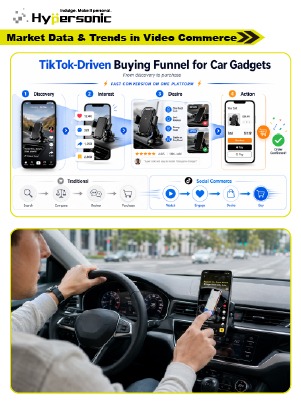
The rise of social commerce, especially through platforms like TikTok, has fundamentally transformed the traditional automotive buying funnel. In the past, consumers followed a linear journey—starting with awareness, moving through research and comparison, and finally reaching a purchase decision. However, with the emergence of TikTok car gadgets, this process has become faster, more dynamic, and highly influenced by content.
Traditionally, buyers relied on search engines, product pages, and reviews to evaluate automotive accessories. In contrast, the TikTok-driven funnel is built around video-based product discovery, where users encounter products organically while consuming content. Therefore, instead of actively searching, users are guided through a seamless journey driven by engagement and visual storytelling.
Moreover, one of the most significant changes is funnel compression. Instead of taking days or weeks to move from awareness to purchase, consumers can now complete the entire journey within minutes. As a result, impulse buying becomes more common, particularly for visually appealing and functional products like car gadgets.
In addition, brands must adapt their strategies to align with this new behavior. For example, optimizing product pages and ensuring consistency between video content and product listings is essential. Consequently, businesses that integrate content, commerce, and user experience will achieve higher conversion rates.
Summary:
Social commerce compresses the traditional funnel, allowing consumers to move from discovery to purchase within minutes, increasing conversion rates dramatically while reshaping how automotive accessories are marketed and sold.
From a market trend analyst perspective, the rise of TikTok car gadgets has created a dual impact across both B2C and B2B segments. While the platform is often associated with consumer-driven trends, its influence extends deeply into supply chains, distribution strategies, and procurement decisions. Therefore, understanding the differences in buyer behavior and sales cycles is critical for businesses adapting to this shift.
In the B2C space, TikTok drives impulse buying through engaging, short-form videos. Consumers often discover products passively, and as a result, purchasing decisions are made and emotionally rather than logically. Moreover, demand is highly trend-driven, meaning viral content can cause sudden spikes in product popularity. This creates opportunities for rapid sales growth, but it also introduces volatility in demand forecasting.
However, in the B2B market, the impact is more strategic and data-driven. Distributors, wholesalers, and OEM buyers increasingly monitor TikTok trends to identify high-demand products early. Consequently, distributor sourcing trends are shifting toward products that demonstrate strong engagement and viral potential. In addition, TikTok enhances OEM awareness, as manufacturers gain insights into end-user preferences without relying solely on traditional market research.
These distinctions align with core analyst responsibilities such as understanding buyer personas and market dynamics .
Therefore, businesses that integrate TikTok insights into their strategy can gain a competitive advantage across both markets.
Summary:
TikTok influences both B2C and B2B markets by accelerating trends, reshaping demand forecasting, and forcing businesses to adapt to real-time consumer behavior, ultimately bridging the gap between consumer demand and business strategy.
The growth of video-based product discovery and social commerce is supported by strong market data, confirming its increasing dominance in digital retail. In recent years, platforms like TikTok have transformed how consumers interact with products, especially in categories like TikTok car gadgets, where visual demonstration plays a crucial role.
According to , global social commerce sales are projected to exceed hundreds of billions of dollars, reflecting rapid adoption across both developed and emerging markets. Moreover, this growth is fueled by mobile-first users who prefer engaging, short-form content over traditional browsing methods.
In addition, TikTok’s engagement metrics highlight why video commerce is so effective. Users typically spend extended time watching short videos, with average watch times significantly higher than static content engagement on traditional e-commerce platforms. As a result, brands gain more opportunities to showcase product features and build emotional connections.
Key data points further illustrate this trend:
Furthermore, platforms like TikTok leverage algorithm-driven recommendations to continuously refine content delivery. Therefore, users are more likely to discover relevant products without actively searching, reinforcing the effectiveness of video-based product discovery.
Consequently, businesses that invest in video content and social commerce strategies are seeing measurable improvements in both engagement and sales performance.
Summary:
Data confirms that video-based commerce is rapidly growing, with higher engagement and conversion rates compared to traditional e-commerce channels, making it a critical strategy for brands targeting modern consumers.
While TikTok car gadgets and social commerce offer rapid growth opportunities, they also introduce significant challenges that brands must address strategically. Although video-based platforms accelerate product discovery and conversion, they often create volatile demand patterns that are difficult to predict and manage. As a result, businesses may struggle to maintain consistent inventory levels and product quality.
One of the primary concerns is product quality inconsistency. Since viral trends can push lesser-known or unverified products into the spotlight, consumers may encounter items that do not meet expectations. Consequently, this can damage brand reputation and reduce customer trust over time.
In addition, TikTok-driven markets are heavily influenced by short lifecycle trends. Products that gain popularity quickly can just as easily lose relevance within weeks. Therefore, businesses must continuously adapt to shifting consumer preferences, which increases operational complexity and risk.
Moreover, there is a growing issue of over-reliance on influencers. While influencers can drive rapid sales, depending too heavily on them may lead to unstable performance if engagement drops or trends change. This creates uncertainty in long-term marketing strategies.
Key risks include:
Furthermore, regulatory considerations are particularly important in the automotive sector, where safety and product compliance cannot be compromised.
Summary:
Despite rapid growth, TikTok-driven sales come with risks such as volatile demand, quality concerns, and regulatory challenges, requiring brands to balance agility with quality control and long-term strategy.
The evolution of TikTok car gadgets is closely tied to emerging technologies that are reshaping social commerce and digital retail experiences. As competition intensifies, brands are increasingly leveraging advanced tools to enhance engagement, improve personalization, and drive higher conversion rates. Therefore, understanding these future trends is essential for staying competitive in both B2C and B2B markets.
One of the most significant developments is the rise of AI recommendation engines. These systems analyze user behavior, preferences, and interaction patterns to deliver highly personalized content. As a result, consumers are more likely to discover relevant car gadgets that match their needs, even before they actively search. This level of personalization not only improves user experience but also increases purchase likelihood.
In addition, AR/VR product demos are beginning to transform how consumers interact with automotive accessories. Instead of relying solely on videos, users can virtually test products, visualize installation, or explore features in an immersive environment. Consequently, this reduces uncertainty and enhances confidence in purchasing decisions.
Moreover, the integration of TikTok-driven commerce with automotive technology ecosystems is gaining momentum. As vehicles become smarter and more connected, car gadgets are evolving to align with in-car systems, IoT devices, and mobile applications. Therefore, the boundary between digital content and real-world functionality continues to blur.
Key insights shaping the future include:
Furthermore, brands that adopt these innovations early will gain a strategic advantage in capturing consumer attention and loyalty.
Summary:
The future of TikTok car gadgets lies in AI-driven personalization, immersive experiences, and deeper integration with smart vehicle ecosystems, creating more engaging and intelligent shopping journeys.
The rise of TikTok car gadgets, social commerce, and video-based product discovery has fundamentally reshaped how automotive accessories are marketed and sold. Throughout this article, it is clear that consumer behavior has shifted from intent-driven search to content-driven discovery. Moreover, the influencer effect and short-video formats have accelerated decision-making, compressing the traditional buying funnel and increasing conversion rates.
However, while the opportunities are significant, brands must also navigate challenges such as demand volatility, product quality control, and platform dependency. Therefore, success in this evolving landscape requires a balanced strategy that combines agility with long-term planning.
To remain competitive, brands should focus on the following strategic actions:
Furthermore, businesses that leverage data insights, adapt quickly to trends, and integrate technology into their offerings will gain a clear advantage. Consequently, those who embrace this shift early will not only capture market share but also build stronger connections with both B2C and B2B audiences.
This site uses cookies to improve your browsing experience. we’ll assume you’re OK to continue. If you want to read more about this, please click PRIVACY thank you.