Blog

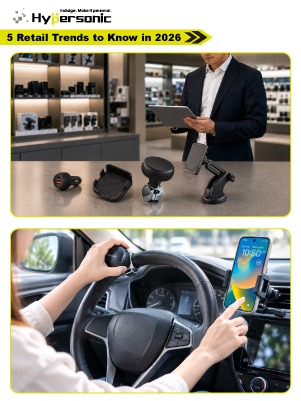
Car accessories demand is increasingly shaped by how drivers use their vehicles in daily life, not simply by how many vehicles are on the road. Today, consumers often look for accessories that improve convenience, comfort, organization, safety, personalization, or overall driving usability. As a result, retailers face a wider range of purchasing motivations than before.
However, strong sales in one category do not always signal broader market growth. A product may perform well because it solves a practical problem, fits a seasonal need, or appeals to a specific driver segment. Therefore, retailers need to understand why consumers buy, rather than focusing only on which products are currently popular.
Moreover, changing lifestyles, digital shopping habits, and higher expectations for product quality are influencing how accessories are evaluated. Retailers that recognize these demand signals can make better decisions about assortment planning, merchandising, inventory, and supplier selection.
Understanding car accessories demand starts with understanding how consumers use their vehicles. A car is no longer viewed only as transportation from one place to another. Instead, many drivers use their vehicles for commuting, family trips, commercial work, long-distance travel, recreation, and even as a temporary mobile workspace. Therefore, accessory demand often develops around specific daily activities and practical needs.
As drivers spend more time in their vehicles, they increasingly look for products that make driving more convenient and comfortable. For example, commuters may value organization and easy access to everyday items, while commercial drivers may prioritize durability and functional improvements. Meanwhile, families may focus on storage, comfort, and convenience during longer journeys.
Because these needs vary by user, retailers should avoid treating all drivers as one customer group. Instead, they can identify different usage scenarios and build product selections around them.
Most accessory purchases can be connected to four broad motivations:
However, the importance of each motivation changes across customer segments. Therefore, retailers should evaluate consumer need states rather than simply adding isolated products because they appear popular.
From a B2B perspective, this approach supports better assortment planning because market trends become connected to actual buyer behavior and purchasing motivations.
Summary: Car accessories demand is not driven by one universal preference. Instead, purchasing decisions reflect how drivers use their vehicles and which problems they want to solve. By organizing assortments around convenience, comfort, safety, and personalization, retailers can interpret demand more clearly and respond more effectively to changing consumer expectations.
Current auto accessory retail trends show that consumers are looking beyond novelty. Instead, many buyers evaluate accessories according to usefulness, fit, reliability, and the value they add to everyday driving. For retailers, this means product selection and merchandising should reflect real customer problems rather than simply follow short-term popularity.
Convenience remains a major reason consumers consider automotive accessories. Organizers, phone mounts, storage products, charging solutions, driving-control accessories, and ergonomic products can all make routine vehicle use easier.
However, retailers should not present these products only through technical specifications. Instead, merchandising should clearly explain the practical benefit. A product page should show whether an accessory saves space, improves access, reduces inconvenience, or supports a more comfortable driving experience.
Consumers also use accessories to make vehicles better suited to their individual habits. This may involve interior appearance, organization, comfort, convenience, or driving feel.
Therefore, retailers can organize products around customer needs rather than relying only on traditional categories. Bundles built around commuting, travel, organization, or comfort may also help shoppers understand how several accessories work together.
For functional accessories, price alone may not create enough confidence. Retailers should also consider material quality, durability, installation security, manufacturing consistency, testing, and supplier reliability.
For example, the supplied automotive product material emphasizes zinc-alloy construction, secure fastening, precision components, testing, and long-term reliability as important product attributes. Therefore, retailers evaluating functional products should consider how clearly suppliers can demonstrate quality and consistent performance.
Online shoppers increasingly depend on product images, specifications, videos, reviews, compatibility information, and comparisons before making a decision.
As a result, strong digital merchandising has become increasingly important. Product taxonomy, search filters, product relationships, content quality, imagery, SEO, analytics, and conversion optimization all contribute to how easily customers can find and evaluate products online.
Retailers should therefore treat product information as part of the sales experience, not simply as supporting content.
Low price and perceived value are not the same. Consumers may judge an accessory according to price + usefulness + quality + expected lifespan + confidence in compatibility.
Consequently, a slightly higher-priced item may remain attractive when its benefits are easier to understand and its quality appears more dependable. This gives retailers a stronger basis for assortment decisions than price competition alone.
Summary: The leading auto accessory retail trends suggest that practical value, personalization, reliable performance, digital product information, and overall perceived quality increasingly shape purchasing decisions. Therefore, retailers should evaluate products not only by wholesale cost, but also by how clearly each item solves a customer problem and how confidently that value can be communicated.
Understanding what car gadget consumers evaluate before purchasing can help retailers improve both product selection and conversion. In most cases, buyers are not judging an accessory on appearance or price alone. Instead, they want confidence that the product is useful, compatible, easy to install, and worth the money.
Before making a purchase, consumers commonly look for:
Among these factors, compatibility and ease of use are especially important because uncertainty can delay a purchase. Likewise, durability and safety can carry more weight for functional accessories. However, attractive design and competitive pricing still influence perceived value.
Therefore, retailers should present the product around the buyer’s decision process rather than only around technical specifications.
Even a technically strong accessory can underperform online if shoppers cannot quickly understand what it does, whether it fits their vehicle, how it installs, what makes it different, or why its price is justified.
For this reason, clear technical communication is an important part of merchandising. The supplied technical-writing guidance emphasizes clarity, audience awareness, SEO, visual communication, research, and the ability to explain technical information in understandable language.
Retailers can reduce uncertainty by using comparison charts, compatibility details, close-up images, installation photos, short demonstration videos, and benefit-led descriptions. As a result, shoppers can evaluate products faster and with greater confidence.
Summary: Car gadget consumers need confidence before purchasing. Clear compatibility information, installation guidance, useful product images, credible quality signals, and straightforward explanations can reduce uncertainty. Therefore, improving product information can be just as important for retailers as expanding the number of SKUs in the catalog.
Car accessories demand can vary significantly depending on the vehicle, the driver, and how the vehicle is used. Therefore, retailers should avoid assuming that every customer values the same benefits. Segmenting demand by real-world use case can help retailers create more relevant assortments and improve product positioning.
For passenger vehicles, consumers may prioritize convenience, organization, personalization, mobile-device integration, and comfort. Commuters, for example, may look for accessories that make daily driving easier, while families may value products that improve storage and interior organization. Meanwhile, other drivers may choose accessories mainly to personalize the cabin or enhance comfort.
Commercial drivers often have different expectations because their vehicles are used repeatedly throughout the day. As a result, durability, ergonomic usability, easy installation, and reliability can become more important than decorative features.
For retailers serving business customers, product consistency may also matter because fleet operators can require multiple units across several vehicles.
Owners of older vehicles may turn to the aftermarket to add convenience or features that were not originally included. Therefore, products that improve usability, organization, or device integration can remain relevant even as vehicle technology changes.
Demand can also differ among professional drivers, fleet users, drivers with specific ergonomic requirements, and mobility-related users where suitable products are available.
From a B2B perspective, understanding the difference between OEM and aftermarket dynamics, as well as the needs of automotive buyers and wholesalers, is important when evaluating market opportunities.
Summary: Consumer demand varies substantially by vehicle and use case. A commuter, professional driver, fleet operator, and owner of an older vehicle may value very different accessory benefits. Retailers can therefore improve assortment relevance by segmenting products around real driving situations instead of treating every vehicle owner as the same customer.
For automotive aftermarket retail, understanding consumer demand is becoming as important as choosing the right products. Retailers need to connect customer behavior with merchandising, inventory planning, pricing, and product performance. Therefore, a more analytical approach can help reduce inventory risk while improving assortment relevance.
Traditional categories such as Phone Accessories, Interior Accessories, and Steering Accessories are still useful. However, retailers can also organize products around customer needs and driving situations.
For example, online category pages can group products under themes such as Daily Driving, Long-Distance Comfort, Commercial Driving, Vehicle Organization, and Driving Convenience.
This approach can help shoppers identify relevant products faster. Moreover, it gives retailers opportunities to create bundles and cross-sell related accessories around a specific use case.
Retailers should monitor more than total sales. Important indicators include:
These metrics can show whether demand is growing, declining, or shifting between categories. Retail and e-commerce analysis also connects consumer behavior with inventory, pricing, promotions, analytics, and omnichannel strategy.
As a result, retailers can make better decisions about replenishment, promotions, and underperforming products.
However, a viral car gadget does not automatically represent durable demand. Social attention may create an initial sales spike, but that interest can disappear quickly.
Retailers should therefore distinguish between temporary attention → trial demand → sustained category demand. Sales velocity, repeat purchasing, customer feedback, search activity, and return rates can help reveal whether interest has lasting commercial potential.
Summary: Automotive aftermarket retail is increasingly a demand-analysis business as much as a product-selection business. Retailers should combine sales data, search behavior, return rates, customer feedback, and broader market signals to separate short-lived trends from accessory categories that can generate sustainable demand and support stronger long-term inventory decisions.
Building a stronger assortment requires more than adding products that appear popular. Instead, retailers should connect car accessories demand with product quality, commercial potential, and supplier capability. A simple four-step framework can make assortment decisions more consistent.
1. Identify the customer need
Start by asking why someone would buy the accessory. Does it improve convenience, comfort, organization, safety, or driving usability? A clear use case makes it easier to evaluate whether the product belongs in the assortment.
2. Validate demand
Next, retailers should look for evidence. Useful signals include:
However, one strong signal is rarely enough. Combining several indicators can help distinguish sustained demand from temporary interest.
3. Evaluate the product
Once demand appears credible, retailers should review usability, quality, installation, materials, reliability, packaging, and differentiation. Moreover, the product should offer a clear reason for customers to choose it over similar alternatives.
4. Evaluate the supplier
Finally, retailers should assess manufacturing experience, consistency, quality control, customization capability, communication, and supply stability. B2B market analysis emphasizes turning demand signals into strategic recommendations rather than relying on isolated data points.
Where relevant, retailers can also explore Hypersonic's automotive accessory solutions or learn more about its car accessory manufacturing capabilities through appropriate internal pages.
Summary: A strong assortment begins with consumer demand but should not end there. Retailers need to validate the opportunity, assess product quality, examine commercial potential, and evaluate supplier reliability. Combining these factors can reduce inventory risk while helping retailers build an accessory range that delivers clearer and more sustainable value to customers.
Car accessories demand is influenced by convenience, personalization, comfort, technology, safety, and changing vehicle-use habits. Consumers increasingly look for products that make everyday driving easier or better suited to their routines. However, demand differs by driver type, vehicle age, lifestyle, and how frequently the vehicle is used.
Rather than one universally popular product category, consumers generally value accessories that combine usefulness, vehicle compatibility, quality, convenience, and reasonable cost. In addition, clear product benefits and reliable performance can strengthen perceived value. Therefore, retailers should evaluate products according to customer needs instead of popularity alone.
Retailers can monitor Google Trends, marketplace searches, internal site-search data, social listening, sales velocity, return data, and customer inquiries. However, a sudden increase in online attention does not always represent sustainable demand. Comparing several signals helps retailers distinguish short-term interest from longer-term auto accessory retail trends.
Retailers should consider product quality, manufacturing consistency, supplier expertise, differentiation, lead times, customization capabilities, documentation, and communication. Moreover, dependable quality control and supply stability can become especially important for B2B buyers managing larger assortments or repeat orders. These factors support more informed sourcing decisions.
Summary: Successful retailers identify accessory opportunities by combining consumer signals with commercial validation. Search activity can reveal interest, but sales velocity, return rates, customer questions, supplier capability, product quality, and margins provide a more complete picture of whether an emerging trend deserves long-term inventory investment.
Turning car accessories demand into sustainable retail growth requires more than reacting to every new trend. Instead, retailers need to understand the consumer needs behind each purchase and determine whether those needs support lasting market potential.
Strong consumer insight can guide a more focused assortment strategy, while product quality helps build trust and reduce the risks associated with returns or poor customer experiences. At the same time, clear merchandising makes product benefits easier to understand and can strengthen perceived value. However, even a well-selected product range depends on reliable supplier relationships that support consistent quality, communication, and supply continuity.
As consumer expectations continue to evolve, retailers that combine market insight with dependable sourcing will be better positioned to respond. Hypersonic works with automotive accessory retailers and distributors seeking practical, quality-focused solutions for changing automotive aftermarket retail needs.
This site uses cookies to improve your browsing experience. we’ll assume you’re OK to continue. If you want to read more about this, please click PRIVACY thank you.